

 LinkedIn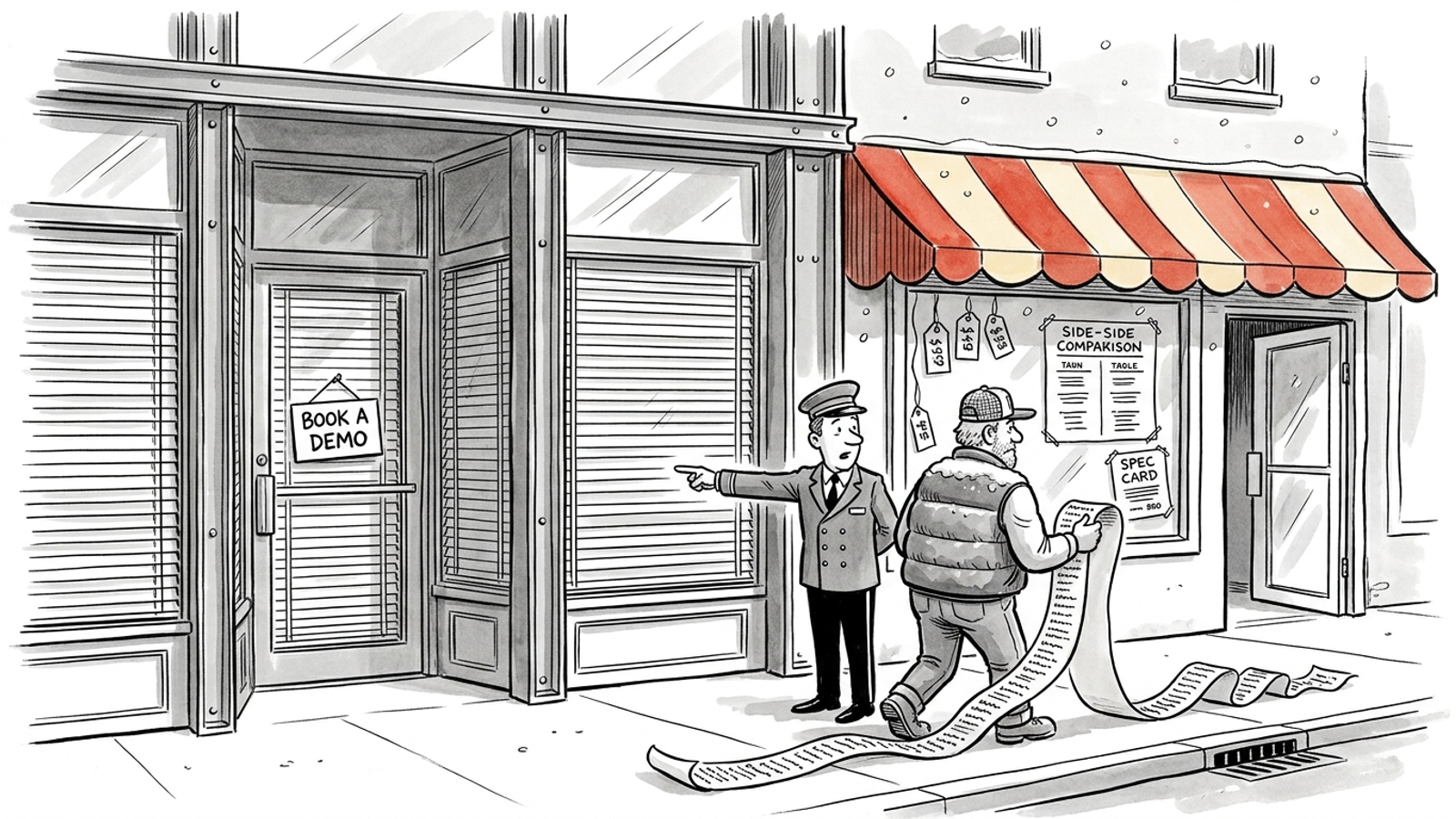
Your company ranks near the top of Google. A buyer asks ChatGPT what to buy and gets your competitor instead. The gap usually is not a missing keyword. It is a missing answer to a buyer’s constraint, a missing comparison or pricing page, or missing outside proof that backs up your claims.
Picture a dispatch-software company with strong reviews and a long-standing organic presence. A buyer asks, What is the best dispatch software for regional trucking fleets under 50 trucks? The answer names a newer competitor and never mentions the established company. The tempting response is to buy a content-gap tool, export the keywords the competitor ranks for, and commission twenty articles.
I would put the credit card away. A traditional content-gap report shows search phrases where another site gets organic visibility and yours does not. An AI citation gap is a different problem: an answer engine has to justify a recommendation for a particular buyer, and it may find clearer, more usable evidence elsewhere. A list of missing topics will not tell you which buying question your site failed to answer.
“A content gap means keywords I’m not covering”
This belief is tempting because keyword gaps have been useful for years. Put your domain and three competitors into Semrush or Ahrefs, export the overlap, and you get a tidy list: fleet dispatch software, truck routing tools, commercial GPS tracking. The apparent next step is equally tidy. Assign those phrases to a copywriter and add more pages.
The search-term report lesson: buyers speak in constraints
Anyone who has audited a paid-search terms report knows the tidy list is not how people actually ask for help. An advertiser bids on fleet software. A prospect asks whether dispatch software can recalculate routes during an I-80 snowstorm without crashing the tablet app. Frase reports that over 81% of buyers attempt self-resolution via AI before contacting sales. Those buyers bring technical objections and edge cases, not just category names.
Consider this prompt: Which dispatch tool integrates with Samsara ELD and charges under $100 per truck without forcing an annual contract? A useful answer must address the integration, price ceiling and contract terms together. If a competitor publishes those details in a clear table while you hide pricing behind “Book a Demo” and leave integration details in a PDF brochure, a keyword export will miss the reason the competitor is easier to recommend.
The cost is not just an unnecessary article. It is treating four connected buying conditions as four possible keywords, then publishing pages that never establish whether your product meets them together. The buyer asked for a fit, not a glossary.
Do instead: collect the exact questions prospects ask before they buy. Check whether your public pages answer the whole question, not merely contain its nouns.
“If I rank on Google, AI will cite me”
A page-one ranking feels like insurance. After years of SEO work, seeing an AI answer omit your company can look like a glitch that will fix itself when the next crawl comes around. The cost of waiting is that you keep defending a position on one results page while buyers evaluate vendors somewhere else.
An Ahrefs study of Google AI Overviews found that 37.9% of cited URLs ranked in the organic top 10. Another 31.2% ranked in positions 11 through 100, and 31.0% did not rank in the top 100. That does not make organic rankings worthless. It does show that ranking well does not guarantee a citation. Beamtrace’s research on Google rankings and ChatGPT mentions also found substantial, but far from complete, overlap.
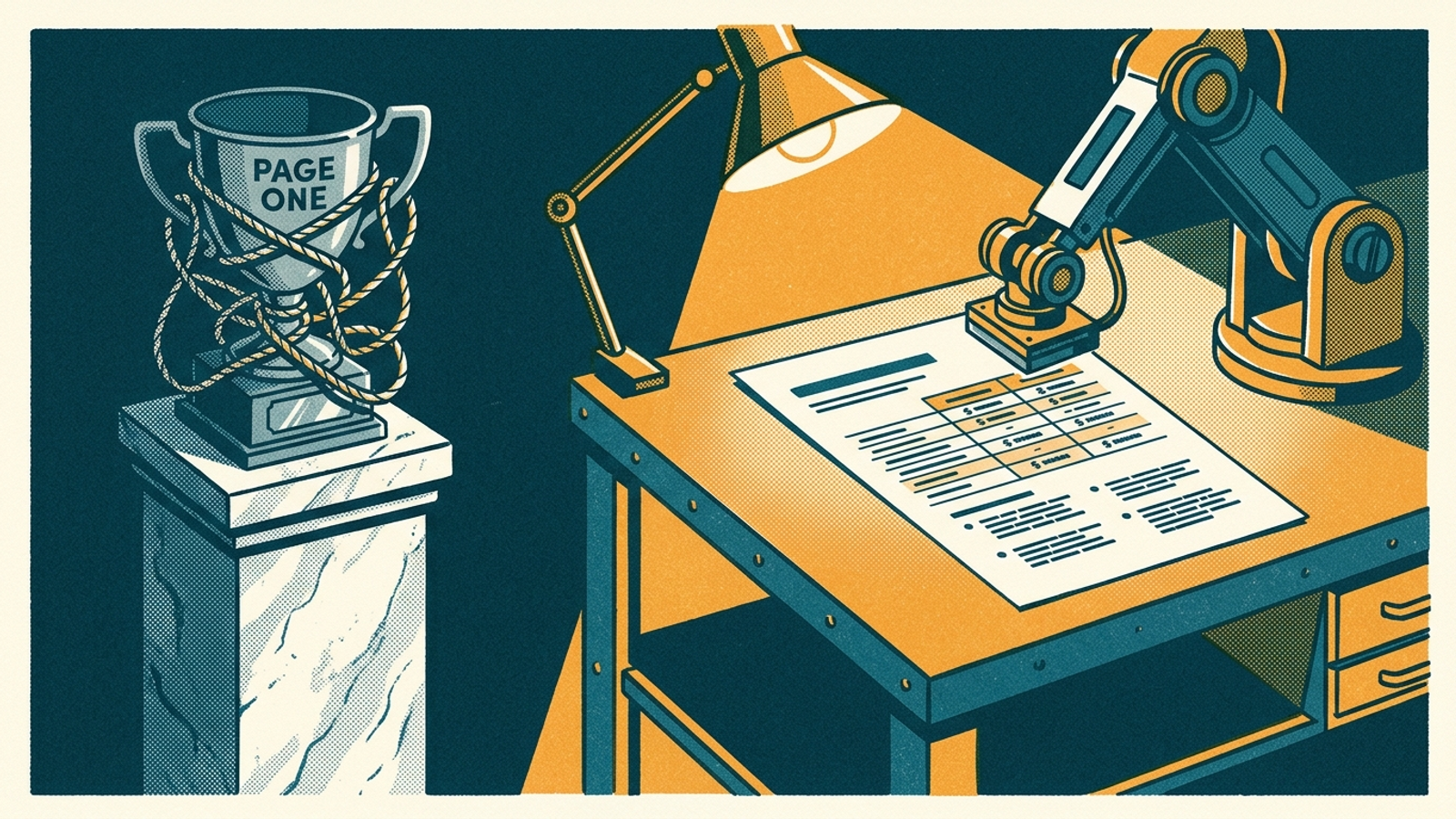
The useful distinction is between being discoverable and being usable as evidence. A strong Google position may bring a page to a buyer’s attention. For a specific recommendation, an answer engine still needs material it can use to support what it says. “Driving innovation” gives it little to work with. A page that states an integration, a price and a clear limitation gives it much more.
That changes the audit. Do not stop at “Does this page rank?” Read it as if you had to answer the buyer’s question using only what is written there. If the answer depends on a sales conversation or your own knowledge of the product, the public page is not doing that work.
Do instead: keep investing in search visibility, but audit your important pages as evidence. Could an answer engine use a sentence on the page to justify recommending you for a buyer with specific constraints?
“More blog posts will close the gap”
More content is an easy order to give. A rival appears in an AI answer, so the team approves The Future of Commercial Fleet Telematics, Top Seven Fleet Tracking Trends and Why Real-Time Dispatching Saves Fuel. Each article may have a purpose. None necessarily answers the question that put the rival in front of a buyer.
I have seen the paid-search version of this logic: add thousands of long-tail variations and call it coverage, even as irrelevant search terms consume the budget. Publishing volume can create the same illusion. You pay for production, but the pages that would settle a purchase decision remain unwritten.
Comparison and pricing pages answer the harder questions
A First Page Sage study of buying-intent queries found citations going to product documentation, explicit pricing pages and structured comparisons. The mechanism is plain enough. When someone asks which product fits a budget or integrates with an existing system, a general trends article cannot establish either fact.
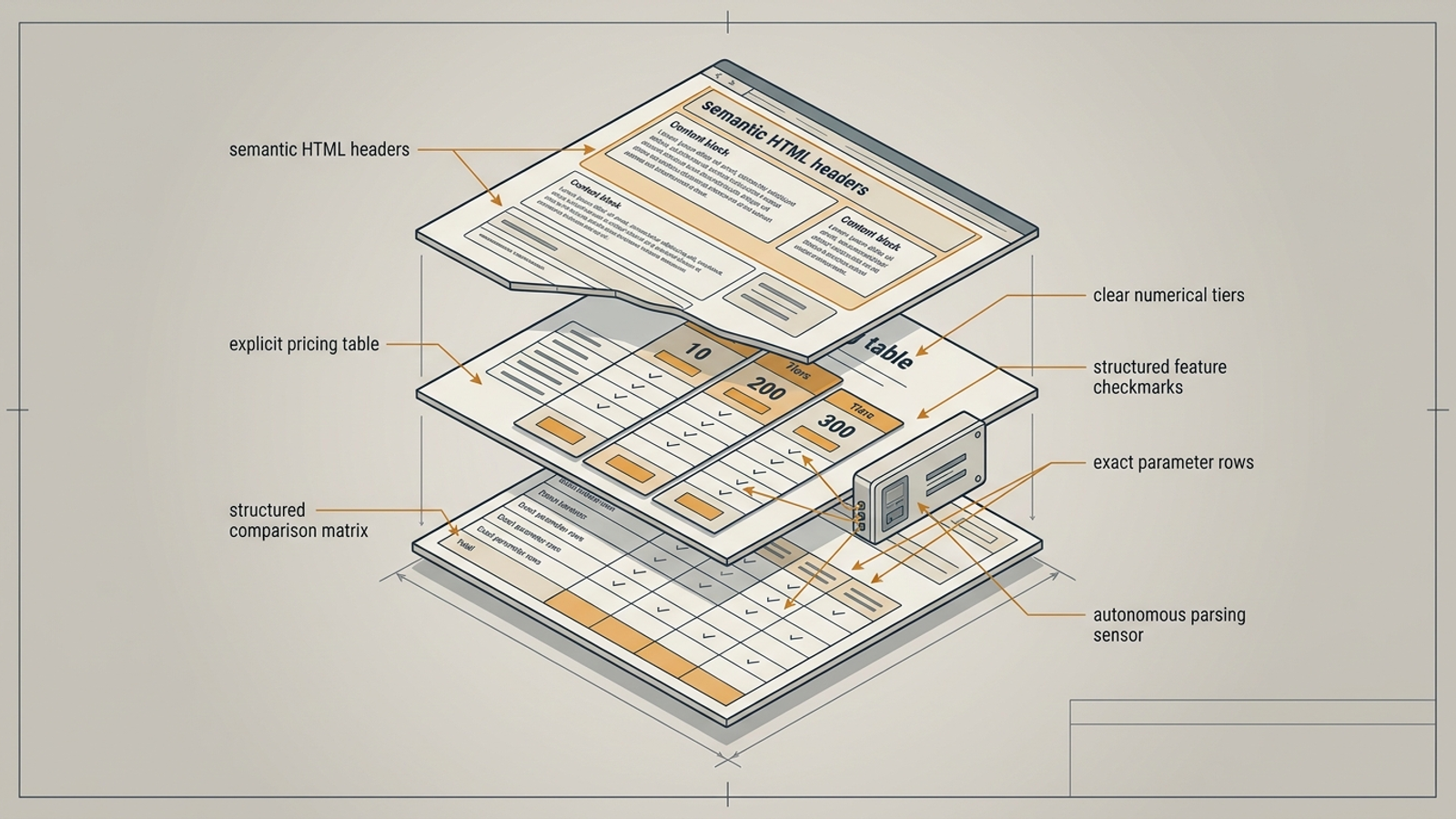
The same problem appears in discussions of competitor recommendations and Platinum.ai’s analysis of why competitors appear in ChatGPT: specific, quotable answers give an engine something to use. A homepage full of slogans does not. If your pricing is gated, your limits are vague and your integrations live in an unindexed manual, a rival willing to state those details publicly has an advantage.
This is the most expensive content-gap mistake I see: paying to produce pages that are easier to approve than the pages a buyer needs. Pricing and comparisons force you to say what the product does, what it costs and where it may not fit. A trends piece lets everyone avoid those decisions. It also lets the competitor answer first.
Do instead: before commissioning another explainer, publish the pages a buyer needs to compare options. State the pricing you can state, document actual requirements, and make the trade-offs legible. Do not invent certainty where your offer cannot provide it.
“AI only reads my website”
Once you find missing answers on your site, rewriting them feels like the whole job. It is certainly part of the job. But a recommendation can draw on sources beyond your own domain, and that creates a second gap that on-page copy alone cannot close.
Suppose your website calls you the leading regional cold-storage provider. If independent trade publications, specialized directories, client case studies and logistics forums say nothing that supports the claim, the statement is still your own marketing copy. A competitor whose capabilities appear on its site and in relevant outside sources offers more corroboration. Better adjectives on your homepage will not change that imbalance.
This is especially costly when the missing proof concerns the question a buyer cares about most. You may have documented a technical capability internally, but if a prospect cannot find a public answer and outside sources offer no confirmation, the engine has little reason to repeat your claim with confidence. Your site can state the answer; it cannot stand in for every source that supports it.
Start by separating two jobs. First, make your own answer clear and public. Then look at the outside sources used in the recommendation and ask what, if anything, independently supports the competing answer. Otherwise you can keep polishing the same claim without addressing why another brand looks better substantiated.
Do instead: check the sources an answer cites, not just the words it uses. If the evidence lives outside your site, identify what is missing from your public footprint rather than treating another homepage rewrite as the cure.
“Software will show me the gaps, and I’m done”
The dashboard pitch is comforting. Enter a domain, wait for a scan, and get a color-coded backlog of missed prompts across ChatGPT, Claude and Gemini. At last, a number to put in the Monday meeting.
A tracker is a scoreboard, not a fix. As research on citation-tracking platforms notes, monitoring brand absences still leaves the work of closing them to someone else. The cited domains can differ considerably between ChatGPT and Perplexity, too. More engine-by-engine alerts can mean more sorting, not a clearer plan. In paid search, a report showing an ad group wasting budget does not add the negative keywords. The same principle applies here.
A useful gap report ends with an action
If you do use a platform, ask it to show more than share of voice. Otterly’s gap-analysis framework points toward four things worth checking:
- The exact buyer prompt: the full question, including constraints such as budget, software stack or company size.
- The competitor recommended: the alternative the engine selected for that question.
- The supporting URL: the competitor page or independent source the answer used.
- The evidence you lack: a public price, integration detail, comparison or other verifiable answer missing from your footprint.
That turns “we lost 250 prompts” into a job someone can actually do. It also exposes a limitation: the software can identify a likely gap without writing an accurate comparison, publishing an approved price or earning outside corroboration. A monthly report that nobody acts on is simply a subscription to watch the backlog grow.
The distinction matters when choosing what to pay for. If the report points to a missing public price, the next move is not another scan. If it points to an outside source supporting the competitor, another keyword list will not supply the proof. Diagnose the gap, then assign the work that closes that gap.
We covered that diagnosis-versus-delivery problem in our review of AI visibility tools ranked by prompt origin. groas takes the execution side seriously: specialized AI models work continuously across paid and organic search, while a named human strategist sets direction and owns accountability. That is a better fit than a standalone dashboard if what you need is ongoing search work, not another list for an already stretched team.

Do instead: start with ten qualifying questions from closed-lost notes, sales calls or support tickets. For each, ask what an engine could verify publicly, which competitor it recommends and what evidence supports that choice. If your answer is in a private sales deck or behind a form, decide what you can put on a public page. If outside proof is missing, a new keyword target is not the task.
“If AI cites me, buyers will click through”
This is the beginner belief I am still not sure about. The optimistic case, consistent with our early client referral logs, is that buyers evaluating substantial contracts click citations to check a claim before booking a call. The cynical case is familiar from Google’s featured snippets: the answer gives people enough to stay in the interface, while the sites providing the information get less of the visit.
I would not promise traffic from a citation. I also would not use uncertainty about clicks as an excuse to leave buyer questions unanswered. If an answer engine cannot find a clear reason to include your brand, you may never enter the buyer’s evaluation set. Close the answer gap first. Then judge the result by whether the right buyers find you and move forward, not by whether a dashboard awards you another mention.